


This is my real-world review of the Sigma 17-40mm f/1.8 lens for Fujifilm. Long story short, this lens is incredible and quite possibly the best X-Series zoom lens available right now!
It’s been a while since I’ve bought a brand new lens for my Fujifilm cameras; the Fujifilm 18mm f/1.4 being the last one around 4 years ago. As well in fact, I’ve only ever bought one third party lens for Fujifilm (the manual focus Samyang 12mm f/2) which I swiftly sold after it barely got any use. Now, fast forward to 2026, with a renewed love of zoom lens especially for travel photography, the Sigma 17-40mm f/1.8 DC Art lens caught my attention and I just knew that I had to add it to my camera bag as my main workhorse lens for travel photography, for commercial shoots, for day to day life, for everything. Yes, it looked a pretty large lens but I thought, why not just see how it performs given the fact this is a f/1.8 zoom lens! Insane.
For those that haven’t read the blog before, over the last couple of years I’ve started to lean towards zoom lenses for my travel photography (particularly when travelling for work) as it just offers so much flexibility that a set of primes perhaps can’t always offer me. When you visit a new city or destination, you never know what’s around the corner and being prepared for anything and everything with a zoom lens just makes so much more sense for me. The Fujifilm 18-55mm f/2.8-4 has been my standard zoom lens for 3 years or so and has seen me through trips to Sicily, Montenegro, Madeira and even Japan and hasn’t missed a beat. However, whilst the images are really good considering its size and price, I still reverted to my prime lenses when looking for something of higher quality. As you will see, I think it’s time for the Fujifilm 18-55mm f/2.8-4 to step aside, with my gratitude for its work over the last few years, for the Sigma 17-40mm f/1.8. This is a lens that will not be leaving my camera let alone my camera bag.


Before we dive right in, I just wanted to say that I purchased this lens myself and have thoroughly tested it out over the last couple of months; through birthday parties, days out with the family and travelling across Belgium and the Netherlands for two weeks. I wanted to be sure that I had enough experience to be able to offer a proper detailed, balanced and ‘real world’ review to help you weigh up whether to add this lens to your camera bag or not.
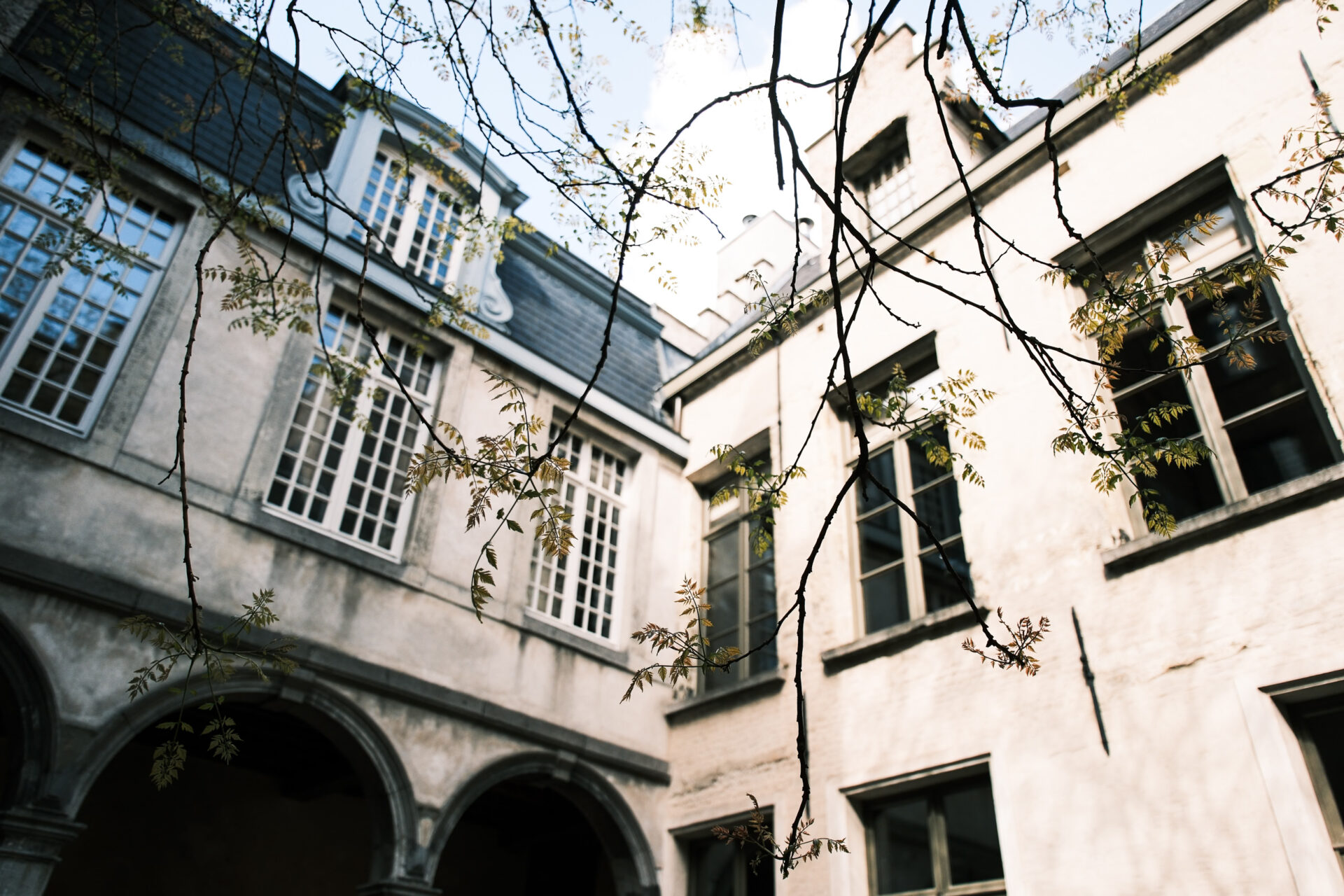
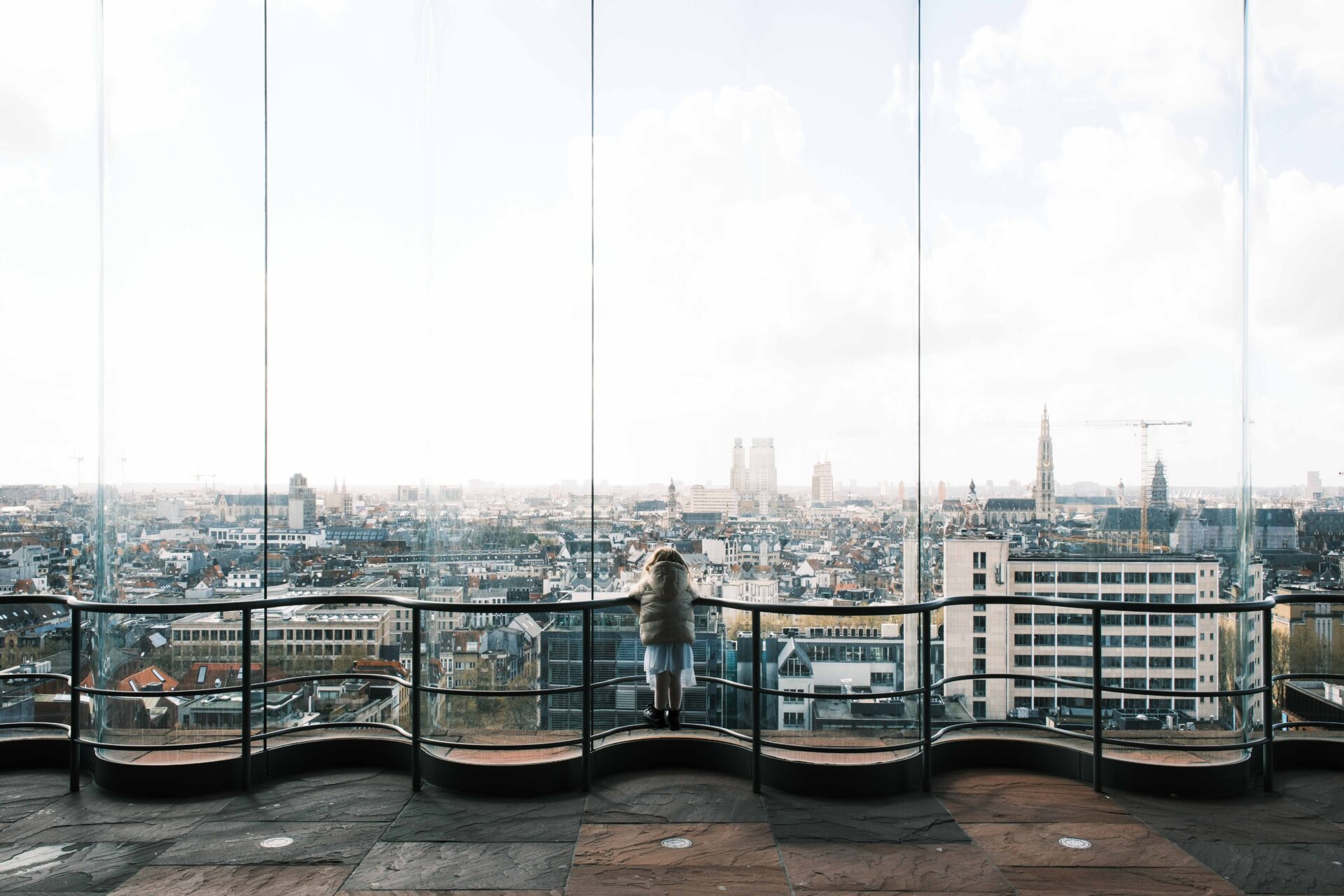
Also, this isn’t going to be the type of review that offers technical analysis etc; I’m definitely not the person for that. Instead, I’ll share my honest thoughts and experiences with the Sigma 17-40mm f/1.8 combined with my Fujifilm X-T5 alongside plenty of photos – all JPEGs with my ‘Summer Negative‘ recipe and minor finishing touches in Lightroom (two images with Mono Gold).
Let’s do this.
SIGMA 17-40MM F/1.8 REVIEW
INITIAL IMPRESSIONS
As soon as I saw the packaging of this lens, the amount of thought and detail that had gone into what is quite simply a box and some paperwork, I knew that this lens was going to be something special. Sigma have managed to bring joy to the often rushed task of unboxing. I wasn’t being purposefully slow to ensure that I captured the right angles to produce an unboxing video, it was simply that there are layers to enjoy before you even get to appreciate the lens. I enjoyed reading the Art of Engineering pamphlet included and actually took a minute to check out the manual, something I’ve never actually done before because well, why would you?
Once I held the lens in my hand, any preconceptions of how large it might have been (or how large it actually is…) and how it might be heavier and longer than the Fujifilm 16-55mm f/2.8 that I’d only recently shrugged aside, disappeared. Immediately. Without even having attached the lens to my camera, I just knew that I would love this lens. I’m quite sure that’s not normal but Sigma have managed to achieve something quite wonderful, at least for me, in that I was attached to the lens without having experienced how it actually performed its purpose, as in, take photographs.
The build quality is exceptional, the aperture ring is tough and meaningful in terms of its ‘clicks’ (possibly the best I’ve experienced since becoming a Fujifilm shooter in 2016) and, once mounted onto my Fujifilm X-T5, it didn’t feel overbearing or too heavy. It balanced really well considering the size which to be frank is the same size as the Fujifilm 16-55mm f/2.8 II once it is zoomed out fully.
The benefits here however include internal zoom, robust weather sealing and, did I forget to mention, an aperture of just 1.8. Oh, and the price is unbelievable. I paid £779 (around $1,046 USD). The comparable option from Fujifilm, the flagship, red badge, 16-55mm f/2.8 II is £1,149 (around $1,544 USD). In my opinion, you are getting far more for your money from the Sigma lens than Fujifilm and that is the first time I have ever said that.


AUTOFOCUS
I’ll keep this section brief as honestly there is not much to say other than it is super fast to lock on and focus and deadly silent. I had absolutely no issues whether at my kids’ parties or when travelling with focusing. In fact, an issue I repeatedly faced was that the lens would focus, the focusing point would turn green and my finger would inadvertently press the shutter before I’d even managed to re-compose or adjust exposure. Too quick.
Another example is that when wandering the streets of Bruges (I’ll come onto it but this was my primary lens during a two week jaunt around Belgium and the Netherlands), I saw an elderly man with a flat cap cycling towards me along a cobbled street with a church tower in the background. I quickly zoomed in as far as I could, 40mm (not far enough sometimes…), switched to continuous focus, switched on face detect, focused, re-composed and took the shot. I had to crop a little afterwards and it wasn’t perfect probably because of the split second I had to attempt the shot, but I was more than happy with it and it was one of my favourite shots of the entire trip.
There are of course Fujifilm prime lenses that focus a little quicker, for example the 18mm f/1.4, but in the real world I did not experience any issues whatsoever in terms of focusing. I found it reliable, quick and, as I said above, completely silent – you can’t hear anything which will obviously be great for those that shoot video. I didn’t pay too much attention to this but the focus does not stay locked when you zoom in and out but, as it’s so quick to re-focus, for me it did not matter.


SIGMA 17-40MM F/1.8 FOR TRAVEL PHOTOGRAPHY
I’ll start this section with a quick discussion about the focal length; 17-40mm on a crop sensor equates to around 25-60mm on a full frame sensor which is not quite the standard 16-55mm / 18-55mm / 24-70mm zoom lens that nearly all photographers will come to use at some point in their lifetime.
For those of us Fujifilm users, or other APS-C users if you’re here, this lens covers some very important focal lengths and is essentially like having a bag of primes all in one complete package; a wide angle of 17mm (sitting wider than 18mm / tighter than 16mm), a 23mm, a 27mm, a 35mm and, unfortunately, as long as it gets is 40mm. My favourite focal length combinations, for travel photography, are 18mm and 35mm though I also love 23mm on my X100VI as a nice compromise between those two focal lengths and being a classic point and shoot focal length. I have always wanted to try Fujifilm’s 27mm pancake lens but never knew whether I would get away with that focal length so it’s nice to have that option too.
All in all, this covers almost everything one could want when travelling – yes it would have been nice to get to 50mm but then we’d presumably end up with an even longer, heavier and more expensive lens. I really enjoyed the 17mm focal length and getting closer to that cinematic 16/24mm field of view; I started to shoot low to the ground and upwards to the subject at 17mm and felt they really looked quite ‘cinematic’. I shot a lot too at the typical focal lengths of 23mm and 35mm with 27mm being surprisingly useful.
In March 2026, as a family we set off to spend two weeks travelling around Belgium with a brief trip into the Netherlands to visit Efteling theme park. We would be attempting our own mini-interrailing trip – flying into Brussels for £16.99 each (apart from our 13 month old who somehow is a flat fee of £25 just to sit on our laps…) then using the train network to visit Bruges, Ghent and Antwerp. In terms of photography, I wanted to carry my camera and the primary lens being the 17-40mm f/1.8 in my Bellroy 6l sling with my DJI Osmo Pocket 3; that’s a pretty good setup. I still brought my Fujifilm 35mm f/1.4, because I can never leave it at home, and the Fujifilm 56mm f/1.2 for more reach. Given this was my first time using the Sigma 17-40mm f/1.8 on a trip, I didn’t know whether I could rely on it completely.
Well, the biggest compliment I can give is that using the Sigma lens whilst visiting cities for the first time, I did not reach for the 35mm f/1.4 once. I did not feel whatsoever that I was missing out by not using that lens which is an insane thing to say given it is my favourite lens by a long stretch. I had to force myself to use the 35mm f/1.4 lens for a morning in Efteling theme park and obviously the images were stunning but sometimes flexibility is far more important. As a long-term prime shooter, someone who loves the constraint and consistency that a prime lens offers, I absolutely cannot imagine travelling without this zoom lens again.
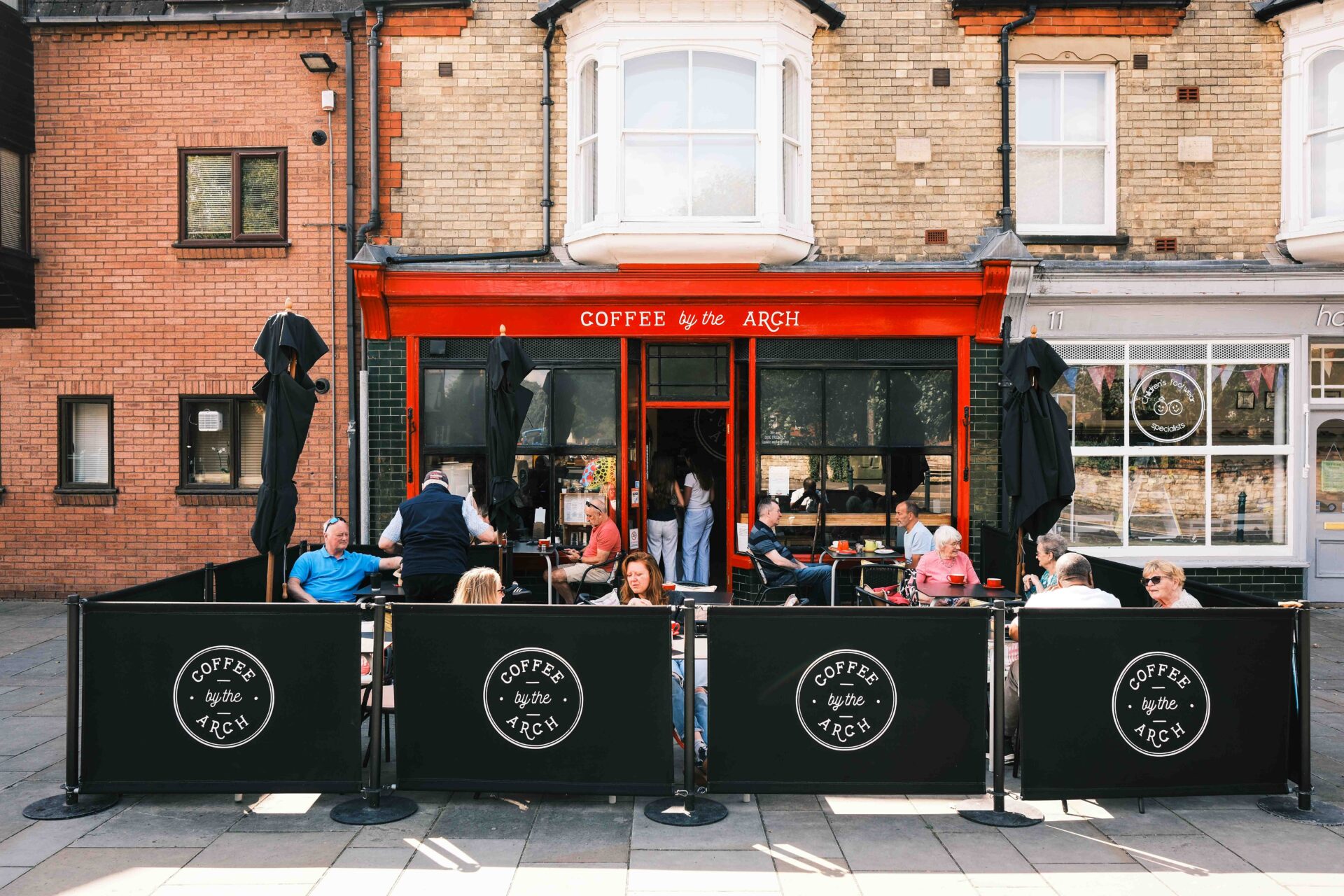
I was able to capture food in low light, my typical hand hold images of coffee and beers, environmental street shots, portraits of the family and pick out details of our surroundings. yes, you can do that with any zoom lens but doing that at f/1.8 allows for a little more pop and, in my opinion, sometimes more interesting images. When shooting at f/2.8 – f/5.6, I couldn’t believe the sharpness, far sharper than the majority of the Fujifilm lenses I own. The image quality is unreal, genuinely.
I did feel that the 40mm was just a little too short and so I found myself spending an hour or two in each city, whilst Emma packed up the cases, with the 56mm as a kind of ‘mop up’ lens to grab some details and images with a bit more compression.
There are different options available to us Fujifilm shooters especially if you value lightweight and smaller lenses such as the Fujifilm 18-55mm f/2.8-4 (GOAT kit lens) or Sigma 18-50mm f/2.8 (this would be in my camera bag if it had an aperture ring). Despite sticking with a mirrorless and crop sensor camera due to wanting to create a lightweight travel set up, I am still happy to use the Sigma 17-40mm f/1.8 – there is nothing like this available to those shooting on crop sensors and I love it. I was able to walk around all day either using a neck strap or keeping it in my sling and using a wrist strap. It was not cumbersome whatsoever.
For travel photography, I could legitimately use this lens and this lens only and come away very happy. Perhaps that’s the next test, to leave the primes behind and just shoot a brand new destination with this lens. It’s one test I would look forward to.


SIGMA 17-40MM F/1.8 VS FUJIFILM 16-55MM F/2.8 II
In early 2025, Fujifilm sent me out the new version of the Fujifilm 16-55mm f/2.8 which I took away with me on a family holiday to Cyprus. I know that that is probably not quite what the lens was designed for but it was a good way for me to see whether it could fit into my camera bag when travelling either with the family or without. To save you reading the full review now, I loved the image quality that the lens produced but, given I had come directly from the Fujifilm 18-55mm, I struggled with the weight and size and so I opted not to purchase the lens at that particular time. I concluded that if I was to do some bigger trips then I would certainly buy it and no doubt it would have limited my use of prime lenses. I also wished for an 18-35mm f/1.4 instead… How I had not heard of the Sigma 17-40mm f/1.8 I will never know but lo and behold this is the lens I wished for!
I much prefer the Sigma lens and I never thought I’d pick a third party lens over a native Fujifilm lens but, despite being heavier and longer, I am more than happy to compromise in return for the image quality and the ability to shoot wide open at just f/1.8.


FINAL THOUGHTS
Hopefully you’ve enjoyed my post on the Sigma 17-40mm f/1.8 for Fujifilm, a lens I think is the best lens available for Fujifilm users right now. I honestly don’t think that the negatives (relatively large and heavy and only 40mm on the long end) outweigh the benefits – this is an extremely sharp lens, offering incredible image quality comparable to Fujifilm’s own prime lenses, fast autofocus and f/1.8 which allows for low light photography (combined with IBIS is amazing) and great subject separation.
Overall, if you can’t tell, I’m really happy with this lens and it’s one that will no doubt become my most used lens over the next few years. Sigma, you have done an incredible job and I can’t wait to see what’s next for us Fujifilm users – maybe a 50-120mm f/1.8…
If you have any thoughts, questions or want to know anything else, feel free to drop me a comment below and I’ll get back to you as soon as possible.
MORE IMAGES


MY 2026 TRAVEL PHOTOGRAPHY GEAR
FUJIFILM X-T5
FUJIFILM X100VI
FUJIFILM 18MM F/1.4
FUJIFILM 23MM F/1.4
FUJIFILM 35MM F/1.4
FUJIFILM 50MM F/2
FUJIFILM 50-140MM F/2.8
PEAK DESIGN STRAPS
RECOMMENDED TRAVEL RESOURCES
BOOKING.COM
EXPEDIA
HOTELS.COM
GET YOUR GUIDE
SKYSCANNER
HOLAFLY E-SIM
DISCOVER CARS
READ MORE OF MY LATEST ARTICLES BELOW
IF YOU ENJOYED ‘SIGMA 17-40MM F/1.8 FOR FUJIFILM: A REAL WORLD REVIEW’ WHY NOT PIN THE IMAGES BELOW?


Please note that some links across this blog are affiliate links.
If you go onto purchase something through these links, I may receive a small commission at no extra cost to you.
If you enjoy what you’ve seen, you can buy me a coffee or a beer here.